Touché: Wearable Vibrotactile Stimulation Hardware for Upper-Limb Spasticity
Published:
Post-stroke spasticity can leave the hand and arm persistently contracted, limiting comfort and everyday movement. Vibrotactile stimulation has shown promise as a way to reduce upper-limb symptoms, but clinic-sized apparatus cannot provide the long, repeated exposure that a person could receive during ordinary activity. Touché explores the wearable hardware needed to make that form of stimulation easier to use outside the clinic.
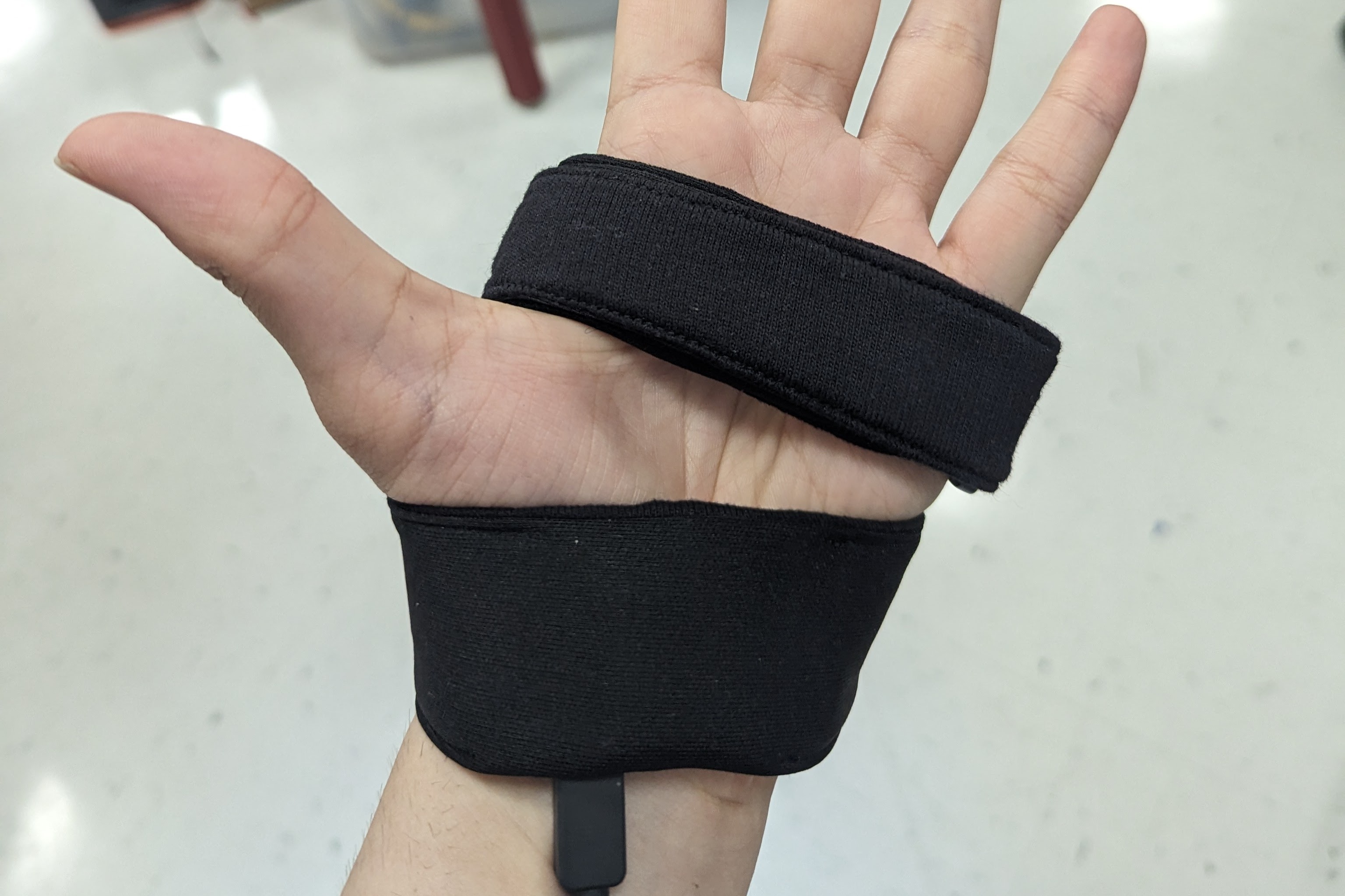
My work focused on flexible electronics and low-cost integration for a take-home device. The engineering problem extends beyond placing vibration motors on the body. A useful system must maintain consistent contact, fit arms and hands with different postures, survive repeated flexing, expose controls that can be operated with one unaffected hand, and protect the battery and electronics during extended wear.
Prior clinical and design studies from the broader VTS Glove project found that participants could wear stimulation devices for many hours, but that conventional glove motions were a major access barrier: inserting or extending affected fingers and rotating the arm could make donning take several minutes. Later strap- and armband-based prototypes reduced those demands. Touché builds on those lessons by treating donning, fit, wiring, and charging as part of the intervention rather than packaging to be solved afterward.
This project page does not claim that the Touché prototype itself has established clinical efficacy. The immediate contribution is an enabling hardware platform for controlled studies of wearable stimulation. Evidence for symptom relief comes from related clinical work, while the prototype still requires its own validation for stimulation delivery, usability, durability, and safety.